Politics is loud. It's messy. If you’ve spent any time on social media or driving through rural stretches of the Midwest lately, you’ve seen the hats, the flags, and that specific, defiant phrase: "This is MAGA country." It’s more than just a slogan on a bumper sticker. Honestly, it has become a shorthand for a cultural divide that seems to get wider every single year. Some people see it and feel a sense of belonging, a feeling that someone is finally fighting for them. Others see it and feel an immediate sense of alienation or even dread.
But what are we actually talking about when we say this is MAGA country?
It’s not just about a specific geography. Sure, you’ll find it in the "Rust Belt" or deep in the heart of the South, but it’s also a state of mind that has redefined the Republican Party from the ground up. We aren't in 2016 anymore. The movement has evolved, survived multiple election cycles, and fundamentally shifted how millions of Americans view the government, the media, and their own neighbors.
The Viral Origin and the Reality of the Phrase
Most people first heard the specific phrase "this is MAGA country" in a context that had nothing to do with a campaign rally. It exploded into the national consciousness during the Jussie Smollett case in 2019. Smollett, an actor, claimed two men wearing ski masks attacked him in Chicago, shouting that specific line. It turned out to be a hoax. Chicago police eventually proved he staged the whole thing.
That moment was a massive turning point.
For supporters of Donald Trump, the hoax became proof that the "mainstream media" was out to get them. It suggested that the phrase itself was being weaponized by the left to paint Trump voters as violent or racist. On the flip side, the incident made the phrase a punchline for a while, but it didn't kill it. If anything, it galvanized the base. They reclaimed it. They started using it ironically at first, and then with total, un-ironic pride.
It's weird how language works. A phrase born out of a fake hate crime became a legitimate badge of honor for a movement that felt constantly under fire.
Geography vs. Identity: Where is MAGA Country?
You can't just point to a map and circle a red state. Well, you can, but you'd be missing the point. Statistics from the 2020 and 2024 elections show that the "MAGA" identity isn't just about small towns. It’s about a specific kind of economic anxiety mixed with a deep-seated belief that the "elites" in D.C. and New York have forgotten how the rest of the country lives.
Think about the "Blue Wall" states—Pennsylvania, Michigan, and Wisconsin.
In these places, the phrase this is MAGA country isn't just a boast; it’s an assertion of presence. It’s a way of saying, "We are still here, and we aren't going back to the way things were before 2016." Experts like Arlie Russell Hochschild, who wrote Strangers in Their Own Land, have spent years trying to figure out this emotional landscape. She found that many people in these regions feel like they are waiting in a long line for the American Dream, and they see others "cutting in line" while the government helps the cutters.
It's about perceived fairness.
Whether that perception matches the economic data is almost secondary to the feeling. When someone puts up a sign saying "This is MAGA Country," they are often signaling that their community values traditional labor, skepticism of globalism, and a very specific brand of American nationalism.
Not just for rural voters anymore
It’s a mistake to think this is only about farmers or factory workers. Recent polling data suggests that the MAGA movement has made significant inroads with Hispanic men and even some Black voters in urban centers. This is a massive shift. In places like the Rio Grande Valley in Texas, the "MAGA country" sentiment is growing. People there aren't necessarily looking at the world through the same lens as a voter in rural Iowa, but they share a common frustration with inflation, border security, and what they call "woke" culture.
The Cultural Significance of the "Red Hat"
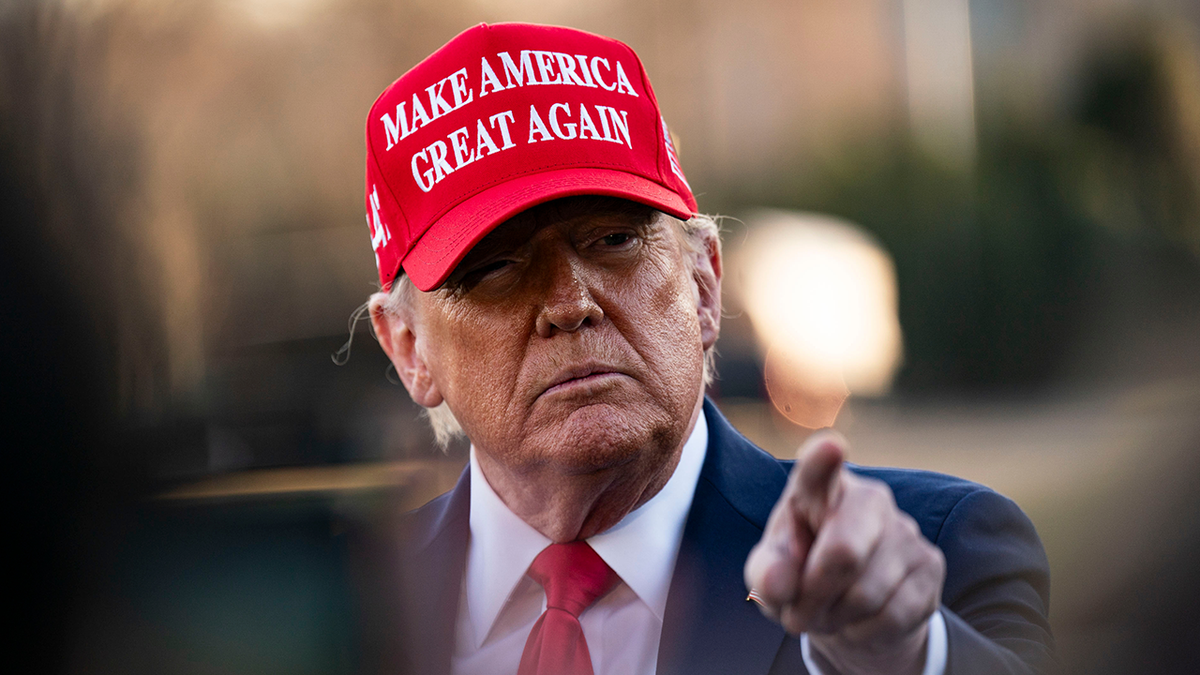
Let's talk about the hat. The red "Make America Great Again" cap is probably the most recognizable piece of political clothing in a century.
It’s a uniform.
When you see it, you know exactly where that person stands. It acts as a filter. In some neighborhoods, wearing that hat is a social death wish. In others, it’s a ticket to a conversation with a stranger who suddenly feels like a brother. This polarization is exactly why the concept of "MAGA country" is so potent. It creates an "us vs. them" dynamic that is incredibly hard to break through.
Sociologists call this "affective polarization." It’s not just that we disagree on tax rates; it’s that we actually dislike the people on the other side.
Why the Movement Didn't Fade After 2020
A lot of political pundits predicted that the MAGA movement would fizzle out after Trump left the White House in 2021. They were wrong. Like, really wrong.
The movement actually became more decentralized.
Instead of just being about one man, it became about a set of ideas:
- Total skepticism of "the deep state."
- A belief that the 2020 election was fundamentally flawed (despite dozens of court cases saying otherwise).
- A focus on "parental rights" in schools.
- An aggressive stance against ESG (Environmental, Social, and Governance) investing in business.
These aren't just talking points. They are the building blocks of a new conservative infrastructure. Media outlets like Newsmax and various independent podcasters have built entire ecosystems around the idea that this is MAGA country. They provide an alternative reality—or an alternative perspective, depending on who you ask—that mainstream outlets like CNN or the New York Times simply don't touch.
The Economic Argument: More Than Just Grievance
If you want to understand why people cling to this identity, you have to look at the numbers. While the national GDP might look good on paper, the "boots on the ground" reality in many parts of the country is different.
Inflation has hit hard.
When people in "MAGA country" talk about the "good old days," they are often talking about a time when a single income could buy a house and a car. They see the transition to green energy not as a necessary step for the planet, but as a direct attack on their livelihoods in the coal or gas industries.
It's personal.
Economists like Nicholas Eberstadt have written about the "men without work" phenomenon in these regions. There’s a sense of social decay—opioid addiction, falling life expectancy—that fuels the fire. When a politician comes along and says, "I see you, and I’m going to fight the people who did this to you," that’s a powerful drug. It makes the "MAGA" label feel like a lifeline.
Misconceptions That Both Sides Get Wrong
We need to be honest here. There are a lot of myths about what this is MAGA country actually represents.
First off, it’s not a monolith. You’ve got "MAGA" supporters who are multi-millionaires and others who are living paycheck to paycheck. You’ve got devout Christians and people who haven't stepped foot in a church in twenty years. The movement is a "big tent" of grievances and hopes.
Secondly, it’s not just about "hate." While there are certainly extremist elements that have latched onto the movement—and the media spends a lot of time focusing on them—most people who identify with the MAGA label see themselves as patriots. They think they are saving the country, not destroying it.
On the other side, MAGA supporters often misunderstand their critics. They tend to see anyone who opposes Trump as a "socialist" or someone who hates America. This lack of nuance on both sides is why the "MAGA country" borders are so heavily fortified.
What This Means for the Future
As we move deeper into 2026, the phrase this is MAGA country is likely to stay at the center of the American conversation. With midterms and the next presidential cycle always on the horizon, the battle for the "soul of the country" is effectively a battle over where those borders lie.
Is the U.S. moving toward a more populist, nationalist future? Or is the MAGA movement a temporary fever that will eventually break?
The data suggests it’s not a fever. It’s a fundamental realignment. The Republican party is no longer the party of Mitt Romney or the Bush family. It is the party of MAGA. This means that even if Donald Trump himself were to leave the stage tomorrow, the "MAGA country" sentiment would remain. The infrastructure is there. The voters are there. The anger is definitely there.
Actionable Insights for Navigating the Divide
If you find yourself living in, visiting, or trying to understand "MAGA country," there are a few practical ways to approach it without losing your mind.
Listen for the "Why" behind the "What." When someone expresses a political opinion that sounds extreme, try to find the underlying anxiety. Is it about their kids? Their job? Their sense of safety? Usually, the core issue is much more relatable than the political slogan.
Diversify your information diet. If you only read the New York Times, you will never understand why someone would wear a MAGA hat. If you only watch Truth Social, you will think the rest of the country is literally on fire. You don't have to agree with the other side, but you should at least know what they are actually saying, rather than what your side says they are saying.
Focus on local issues. Political polarization is usually at its worst at the national level. When you talk about local schools, local roads, or local businesses, the "MAGA country" barriers often start to melt away. People care about their immediate surroundings more than they care about D.C. drama.
Acknowledge the complexity. Stop looking for simple heroes and villains. The "MAGA country" phenomenon is a result of decades of economic shifts, technological changes, and cultural friction. There are no easy answers, and anyone who tells you otherwise is probably trying to sell you something.
The reality is that this is MAGA country is a phrase that won't go away because the conditions that created it haven't gone away. Whether you love it or hate it, understanding it is the only way to understand where America is headed next. It’s a complicated, loud, and often confusing part of the national identity, but it’s one that defines the current era.
Keep an eye on the local elections in 2026. That’s where you’ll see the real "MAGA country" in action—not on cable news, but in the school board meetings and town halls where the next version of this movement is currently being built.