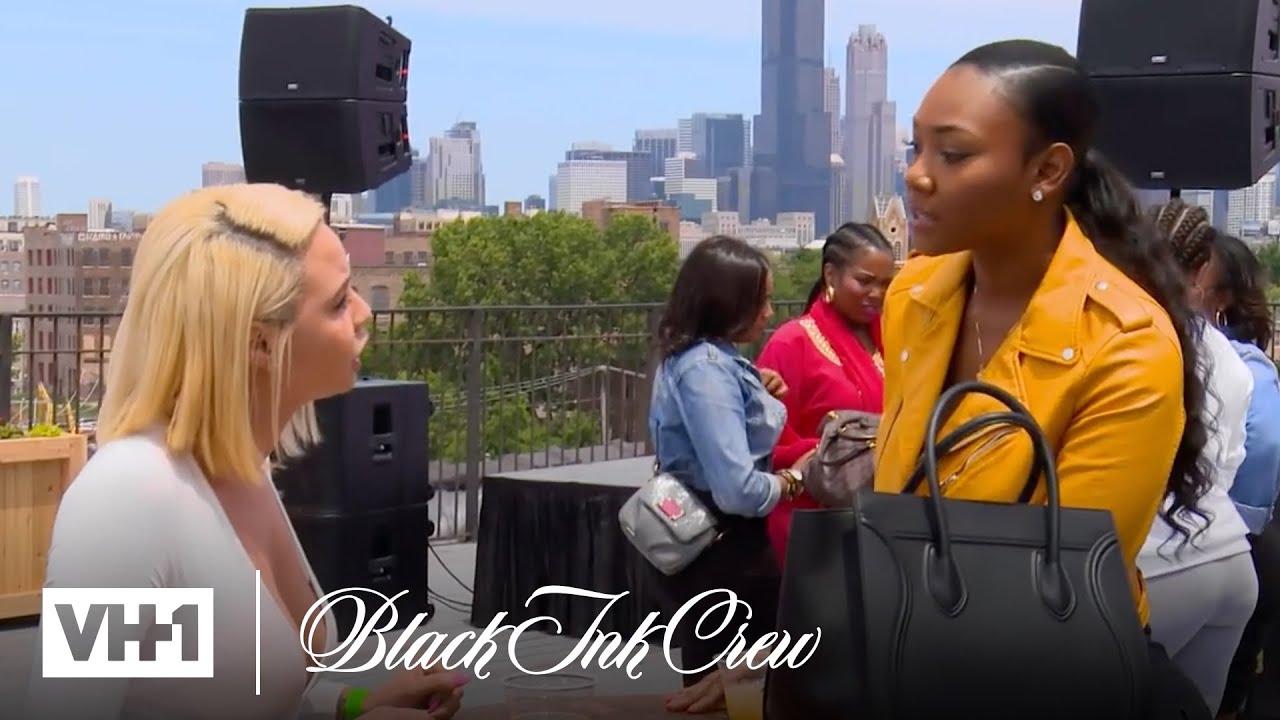
Phor Brumfield isn't just another reality TV star who happened to pick up a tattoo machine. Honestly, if you’ve followed Black Ink Crew Chicago, you know that Phor—often just called Phor—has been the heartbeat and the occasional lightning rod of the 9Mag crew since the cameras started rolling in 2015. He’s a weird mix of hyper-masculinity and radical vulnerability. It's rare. You don't usually see a guy on a show built on "toughness" and "street cred" break down about his mental health in such a raw, unfiltered way.
But that's Phor.
He didn't just come for the fame. He came to build a brand that spans from the skin to the speakers. While Ryan Henry was the "boss" and Don was the "wild card," Phor was always the artist. He’s the guy trying to bridge the gap between the gritty Chicago tattoo scene and the competitive world of hip-hop.
The 9Mag Origin and the Black Ink Crew Chicago Legacy
To understand Black Ink Crew Chicago Phor, you have to look at the shop itself. 9Mag wasn't just a business; it was a sanctuary. Founded in the wake of tragedy, the shop represented a new era for Black tattoo artists in Chicago. Phor was a founding member, a day-one artist who brought a specific level of credibility to the chair. He wasn’t a beginner. He was already established in the city's underground scene before VH1 ever sent a production crew to the South Side.
The show's dynamic was always messy. 9Mag fell apart, got rebuilt, moved locations, and saw friendships explode in 4K resolution. Through it all, Phor’s role was often that of the peacekeeper, though he certainly had his moments of drama—specifically when his personal life and "sending photos" scandals hit the blogs. It’s easy to forget that these guys are actually working artists when the editing focuses on the club fights.
Phor’s tattooing style is deeply rooted in the Chicago aesthetic—lots of black and grey, fine lines, and pieces that tell a story of survival. But for him, the ink was always a precursor to the rhythm.
Music, Mental Health, and the "Chi-Town" Anthem
Most reality stars try to start a music career because they are on TV. Phor was doing music because it was his lifeblood. When his track "Chi-Town" dropped, it wasn't just a local hit; it became a genuine anthem for the city. It showed that he had actual talent, not just "reality star talent." There is a massive difference between the two.
Then things got heavy.
One of the most significant moments in the history of the franchise wasn't a fight or a hook-up. It was Phor opening up about his depression. In a culture where Black men are often told to "man up" and "keep it moving," Phor used his platform to talk about suicidal ideation and the crushing weight of his mental state. It was uncomfortable to watch. It was real.
He didn't sugarcoat it. He showed the days where he couldn't get out of bed, even with the cameras waiting. This vulnerability changed the trajectory of his brand. He went from being "Phor the rapper" to "Phor the advocate."
The Evolution of the Artist
Success in the tattoo world is about more than just a steady hand. It’s about longevity.
- Phor’s Music Discography: He didn't stop at one single. Albums like Cake and Butterfly showed a progression in his sound, moving from trap-heavy beats to more melodic, introspective tracks.
- The Tattoo Brand: Despite the TV drama, he maintained a client base that valued his specific artistic vision.
- Fitness and Lifestyle: Phor underwent a massive physical transformation during the show's run, pivoting into fitness and wellness, which further solidified his "reinvention" arc.
The Complicated Reality of Being "TV Famous"
Let's be real: reality TV is a double-edged sword. For Black Ink Crew Chicago Phor, the exposure was a godsend for his bookings and his Spotify streams. But it also put his every mistake under a microscope. When his private business leaked to the public, it wasn't just a "bad day"—it was a national trending topic.
He’s had to navigate the "fake" versus "real" aspects of production. Fans often wonder how much of the 9Mag drama was scripted. While the situations might be "produced," the emotions Phor showed were clearly genuine. You can't fake that kind of breakdown. You can't fake the sweat of a man trying to finish a back piece while a camera operator is three inches from his face.
He also had to deal with the shifting dynamics of the 9Mag family. The rift between Ryan and the rest of the group forced Phor into a weird middle ground. He stayed loyal to the craft while trying to navigate the fractured egos of his closest friends. It’s a miracle the shop survived as long as it did under that much pressure.
What’s Phor Doing Now?
The show might not be the juggernaut it once was, but Phor hasn't disappeared. He’s leaned heavily into his independent music career and his role as a father. Becoming a dad changed his perspective—you could see the shift in his social media and his public appearances. The "party boy" persona started to fade, replaced by a guy who seems more focused on his legacy than his next TV check.
He still tattoos. He still records. But he does it on his own terms now.
The "Black Ink" brand is a beast, but Phor managed to exit the most chaotic years with his reputation as an artist intact. That’s a rare feat in the world of VH1. Most people get eaten alive by the "character" they play. Phor stayed Phor.
Key Takeaways for Aspiring Creatives
If you’re looking at Phor’s career as a blueprint, there are a few things you have to understand about the grind. It isn't just about getting lucky with a casting director.
- Diversify your skills. Phor never relied solely on tattooing. When the shop was in shambles, he had his music. When the music was slow, he had the ink.
- Vulnerability is a strength. His willingness to talk about mental health created a deeper connection with his audience than any tattoo ever could.
- Own your mistakes. He’s been through the ringer with public scandals, but he didn't go into hiding. He faced it, laughed at himself when necessary, and kept moving.
- Stay rooted in your city. Despite the fame, Phor remains a Chicago guy through and through. That authenticity is why people still care.
Final Insights on the Phor Phenomenon
Black Ink Crew Chicago Phor represents the modern multi-hyphenate. He is a reminder that you don't have to stay in the box people build for you. If you want to be a tattoo artist who raps about his feelings and advocates for mental health, you can do that. But you have to be willing to bleed for it—sometimes literally, under the needle.
His journey from a South Side artist to a household name in the tattoo community wasn't a straight line. It was jagged, messy, and often painful to watch. But that’s what makes it human. In an era of filtered photos and curated lifestyles, Phor’s messy reality was exactly what the audience needed to see.
If you are looking to follow in his footsteps or simply want to support his work, focus on the art first. The fame is just noise. The work—the tattoos on people's skin and the music in their ears—is the only thing that actually lasts. Keep an eye on his independent releases and his guest spots at tattoo conventions; that’s where the real Phor Brumfield still lives.